Radio and communications
Fleets, tower networks, dispatch consoles and the federal licensing behind them. Radio is the system people reach for when everything else has already failed, so it is designed around where crews actually stand rather than where the drawing says they will.
Equipment
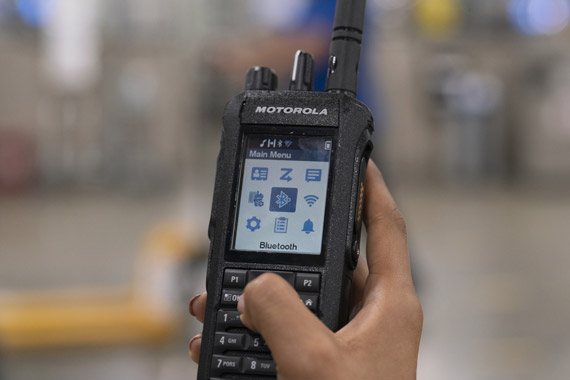
Two-way radios
The crew can talk on the first morning, because portable and mobile fleets arrive programmed and fleet-mapped rather than in a box.
Radio network infrastructure
Coverage reaches the far end of the site, from tower sites, repeaters, backhaul and antennas engineered against a coverage map rather than a guess.
Push-to-talk over cellular
A driver two provinces away is on the same channel as the yard, because the talkgroup runs over carrier networks as well as over radio.
Accessories
A failed headset does not take a worker off the air, because speaker mics, batteries, chargers, mounts and cases come from the same place as the radios.
Cellular boosters
A phone works in the basement, the plant and underground, because signal is carried into the places the structure blocks it.
Satellite phones
A crew beyond any terrestrial network can still call out, on handsets and airtime we arrange and manage.
Body cameras
What happened is recorded and retrievable, through evidence capture and management built for the work rather than for consumers.
Vehicle installation
The truck leaves fitted and working, with mobile radios, antennas, boosters and lightbars installed rather than handed over in parts.
Dispatch, monitoring and recording
Dispatch console systems
One operator runs every channel from one position, on a console platform rather than a row of radios and a note pinned to the desk.
Monitoring and tracking
A lone worker who goes down is noticed, through man-down, GPS location and alarm workflows rather than a check-in call that nobody made.
Workflow and alerting software
A machine alarm reaches the person who can fix it, because the radio system raises the notification and the ticket.
Voice and data recording
You can retrieve what was said and when, because radio and telephony are captured, retained and searchable rather than gone.
Interoperability and bridging
A neighbouring agency can be brought onto the channel during an incident, because radio, telephony and dispatch are bridged across sites.
Control room build-out
The room works as one operating position, from consoles and audio through to the video wall and the furniture around them.
Licensing and lifecycle
ISED frequency licensing
An ISED licence, the federal authorisation to transmit on your frequency, is in place before the radios ship, because we prepare and manage every application on your behalf.
Non-US supply options
A procurement policy that rules out US-manufactured equipment does not rule out the project, because New Zealand built equipment covers the same scope.
Service and repair
A failed radio is swapped rather than waited for, from a loaner pool, a repair bench and scheduled tower maintenance.
Rentals
An event, a shutdown or an emergency gets a fleet for the weeks it needs one, without buying radios that then sit in a cupboard.
- Physical securitySee what happened and prove it, because video, access and alarms land on one timeline you can search by door and by time.
- Network and managed ITOne compromised device stays one compromised device, because operational traffic is separated from office traffic by written policy.
- Audio visual and pagingThe meeting starts on time, because the room is a standard kit repeated across sites and it is checked before you walk in.
- Design and consultingThe conduit is in the wall before anyone needs it, because the systems were specified while that was still cheap to change.
Let’s talk about your project.
Early concept, active specification, out to tender, or a system already in place. Wherever you are in the process, our team can help.